
The Role of Skill in Poker
In the realm of poker, skill is the defining factor that elevates the game beyond mere luck. Unlike traditional games of chance where outcomes are primarily determined by random events, poker requires players to engage in strategic thinking and decision-making rooted in limited information. The ability to read opponents, analyze betting patterns, and calculate odds creates an environment where skilled players can consistently outperform those who lack experience, which is why many choose to explore options like MCW Casino for their gaming experience. This multifaceted skill set encompasses not only a grasp of the game’s mechanics and probabilities but also the psychological tactics necessary to influence the outcome of each hand.
Strategic elements in poker include hand selection, understanding table positions, and the ability to anticipate the moves of opponents. A player who can accurately gauge when to fold, call, or raise based on their hand strength and the behavior of others at the table gains a significant advantage. This decision-making process is largely informed by experience and knowledge, demonstrating that success in poker is not a matter of chance but a calculated approach that often leads to victory. The interplay between skill and decision-making plays a pivotal role in determining the success of players.
Research underscores the assertion that skill heavily influences poker outcomes. Numerous studies have shown that players who have undergone professional training consistently outperform amateurs over time, regardless of the specific format of the game. In both tournaments and cash games, the disparity in skill levels becomes evident as the best players routinely achieve higher standings. This consistent performance among skilled players solidifies the argument that poker is fundamentally a game of skill, with long-term success arising from expertise rather than luck alone.
The Psychological Aspect of Poker
The psychological dimension of poker introduces another layer of skill that is crucial to the game’s complexity. Players need to master their own emotions as well as interpret those of their opponents. The ability to bluff effectively and manipulate opponents into making suboptimal decisions is a hallmark of a skilled player. For instance, a seasoned player might exhibit confidence through aggressive betting patterns, which can lead an opponent with a stronger hand to fold, believing they are outmatched. This psychological interplay highlights the importance of understanding human behavior and emotional control, alongside mathematical skills.
Moreover, recognizing “tells,” or subtle cues that may indicate a player’s strength or weakness, is paramount in the game of poker. Experienced players develop the ability to detect physical or verbal signals that reveal their opponents’ hand quality and intentions. This skill of reading opponents not only enhances decision-making but also strengthens the argument that poker transcends pure chance. By honing these psychological skills, players approach the game as a strategic battle of wits, where understanding human psychology can yield significant advantages.
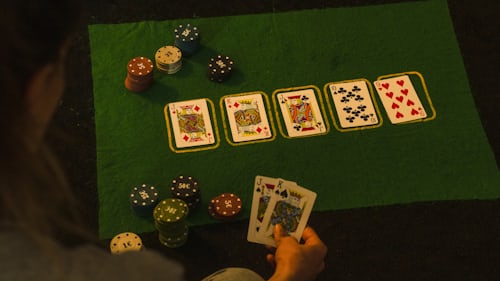
A player’s mindset is equally influential in determining their performance at the poker table. Mental resilience in handling the inevitable fluctuations of luck—often referred to as variance—is essential for sustained success. Skilled players recognize the importance of maintaining composure, regardless of whether they are winning or losing, thereby minimizing the impact of emotional swings on their gameplay. This self-awareness and emotional regulation distinguish adept players from those who crumble under pressure, reinforcing the position that skill is the cornerstone of poker excellence.
The Importance of Strategy and Mathematics
Strategy and mathematics are the bedrock of poker, underscoring the game’s dependence on skill. Players must adeptly calculate pot odds, implied odds, and expected value to make informed decisions throughout the game. For example, a player who understands the odds of drawing a necessary card compared to the potential rewards in the pot can make a confident choice about whether to continue in the hand. This mathematical analysis not only informs decision-making but also clearly differentiates skilled poker players from their less experienced counterparts.
Additionally, strategic planning extends beyond immediate calculations and encompasses long-term approaches that account for various game scenarios, including the differing skill levels of opponents and the evolving dynamics of the table. Successful poker players meticulously analyze past hands, adjusting their tactics based on previous outcomes, and continually refining their strategies. This commitment to strategic development transforms poker into a game of thoughtful planning and adaptability, where experience translates into superior decision-making over time.
The application of probability theory in poker further illustrates the game’s reliance on skill. Players who grasp the mathematical principles that govern hand probabilities can significantly enhance their gameplay. For instance, understanding the likelihood of completing a flush or straight can influence not only betting behavior but also overall strategy. By mastering these mathematical concepts, players improve their ability to make informed decisions, demonstrating that success in poker relies heavily on skillful application rather than mere chance.
The Long-term Success of Skilled Players
The notion of poker as a game of skill is strongly supported by the long-term success of top players. Skilled professionals consistently achieve financial gains that surpass those of amateur players over numerous games. This observed consistency in results makes it evident that while luck may influence short-term outcomes, it is ultimately the application of skill that dictates success over time. The ability to adapt strategies based on varying opponent skill levels further reinforces this perspective, as it illustrates how skillful players navigate the complexities of the game.

Moreover, prestigious poker tournaments provide a platform that showcases the prowess of skilled players. High-stakes events attract elite professionals who utilize a diverse array of skills to overcome the challenges posed by their opponents. These tournaments often reveal that the most successful players leverage their extensive knowledge, strategic insights, and psychological tactics, allowing them to stand out from less experienced competitors who may rely predominantly on luck. The dominance of skilled players in these competitive environments underscores the critical importance of skill over chance in determining success.
While luck undeniably plays a role in individual hands, the cumulative evidence strongly suggests that skill is the decisive factor for sustained success in poker. Players who dedicate themselves to honing their abilities through practice, analysis, and experience consistently outperform those who enter the game with a mere reliance on luck. This distinction perpetuates the understanding that poker is primarily a skill-based game, where expertise can consistently triumph over chance in the long run.
Your Path to Poker Mastery
If you’re eager to delve into the world of poker and enhance your skills, a variety of resources are available to guide your journey. Whether you are a novice seeking to learn foundational strategies or an intermediate player aiming to refine your tactics, there are numerous platforms and communities designed to support your growth. Understanding the intricacies of poker and leveraging online resources can significantly impact your progress toward becoming a proficient player.
Engaging in discussions with experienced players, participating in online forums, and utilizing educational materials are all effective ways to elevate your game. Many online training sites offer tutorials that cover everything from basic rules to advanced strategies, allowing you to learn at your own pace. Additionally, practice through online poker games enables you to apply what you’ve learned in real-time, solidifying your skills and building confidence as a player.
By immersing yourself in the wealth of knowledge and resources available, you can develop a focused approach to mastering poker. As you continue to refine your skills, remember that success stems from a blend of practice, strategic thinking, and a nuanced understanding of the psychological elements inherent in the game. Embrace this journey, and you may find yourself navigating the poker table with the skill and confidence characteristic of seasoned professionals.